Posted in NADMO_Articles.
 The delegation was warmly received by the Bono East Regional Minister, Hon. Francis Owusu. The purpose of the visit was to gather first-hand information on the conditions of displaced persons in the region as a result of the Sawla conflict and to assess the general situation.
Hon. Francis Owusu, the Bono East Regional Minister, confirmed that several displaced persons had migrated to various districts, including Techiman North, Techiman South, Kintampo South, Timpone, and other parts of the region. He also presented an official report to the Director-General, detailing the data gathered during the visit.
Hon. Owusu also highlighted some of the challenges faced by NADMO in the Bono East Region. These challenges included lack of vehicles for operational duties, inadequate personnel, especially in the zonal areas, and limited relief items to support the displaced persons.
In his response, Major (Rtd.) Dr. Kuyon commended the NADMO team in the region for their dedication and resilience despite the difficulties they face. He assured the Regional Minister and the NADMO staff that the issues raised would be addressed. He further emphasized NADMO’s commitment to providing the necessary resources to strengthen operations in the Bono East Region and to ensure the well-being of displaced persons.
The Director General was accompanied by the Deputy Director General for Technical, Mr. Ahmed-Rufai Aggudey and the Director of Man-Made Disasters, Mr. Maxwell Niber.
The visit reaffirmed the organisation’s resolve to enhance disaster response and management efforts across the country.
Posted in NADMO_Articles.

The Director General of NADMO, Major (Rtd) Dr. Joseph Bikanyi Kuyon, was joined by the Deputy Minister of Education, Hon. Dr. Clement Apaak, and the Greater Accra Regional Minister, Hon. Linda Akweley Ocloo, to donate relief items to Labone Senior High School following a fire outbreak that damaged the girls' dormitory.
The donated items included 300 mattresses, 350 plastic buckets, 350 plastic plates and cups, 20 packets of roofing sheets, 2 boxes of roofing nails, 350 mosquito nets, and 350 blankets.
Presenting the items, the Director General of NADMO, Major (Rtd) Dr. Kuyon stated that the donation formed part of the organisation’s efforts to bring effective relief to the affected students and to ease the tension in the school. He further reassured the organization’s commitment to support the school.
The Deputy Minister of Education and the Greater Accra Regional Minister commended NADMO’s effort for the timely intervention and support. Hon. Dr. Apaak, also stressed on the ministry’s commitment in rebuilding the dormitory as work has already commenced.
The headmistress of the school, Mrs. Rejoice Akua Acorlor, expressed her gratitude to NADMO upon receiving the items.
“Your timely and thoughtful contribution will significantly impact the lives of our students affected by the fire incident,” She stated.
Posted in NADMO_Articles.

Major (Rtd) Dr. Joseph Bikanyi Kuyon, Director General of the National Disaster Management Organisation (NADMO) has expressed the organization’s readiness to collaborate with key stakeholders to mitigate the impact of this year’s rains on citizens.
He said this when he paid a courtesy call on the Greater Accra Regional Minister, Hon. Linda Ocloo, at her office on Monday, March 17, 2025. The visit aimed to enhance collaboration between NADMO and the Regional Coordinating Council (RCC) for better preparation for this year's rainy season.
For a start, he said NADMO had already met with its regional directors and is currently working to revive the various Disaster Management Committees to ensure the smooth running of its preparedness programme ahead of the rains.
He expressed grave concerns about the number of unauthorized structures currently built on waterways, stressing that it is one of NADMO’s biggest challenges.
He, therefore, appealed to the Regional Minister to use her office to find a lasting solution to the issue. “I assure you to use my office to provide the needed security personnel to enable your office to embark on any demolition exercise to clear the way for the flood waters”, he stated.
The Regional Minister expressed gratitude to the NADMO Director General and his team for their visit. She stated that her office has developed a schedule for several planned demolition exercises in the Greater Accra Region.
She mentioned various structures built on waterways have been marked for demolition, and she emphasized the importance of establishing a 24-hour task force to prevent individuals from rebuilding in those areas.
According to the Minister, some unauthorized structures within the Tema area have been demolished, and more demolitions are planned before the rains arrive.
The Director General, Major (Rtd) Dr. Kuyon was accompanied by Deputy Director General (DDG) Operations, Hon. Teddy Addi Safori, DDG Technical, Mr. Ahmed Rufai Bolas, DDG Finance and Administration, Hajia Lutfia Saeed Jamal (PHD), DDG Protocol and Relief, Mr. Samuel Aboagye, DDG Community Empowerment and Sustainable Livelihood, Hon. Albert Akuka and Director of Inspectorate, Mr. Richard Amo Yartey.

Posted in NADMO_Articles.

The National Disaster Management Organisation (NADMO), in collaboration with the US-based Johns Hopkins University and Kwame Nkrumah University of Science and Technology (KNUST), conducted a seminar focused on finding a lasting solution to the problem of drowning in the country.
The seminar, hosted by NADMO, brought together key stakeholders in the fight against drowning in Ghana. The event occurred at the NADMO Headquarters in Accra and was attended by representatives from the Johns Hopkins Research Institution and the Kwame Nkrumah University of Science and Technology (KNUST). All participants shared a common goal: to address the issue of drowning in the country.
The Director General of NADMO, Major (Rtd) Dr. Joseph Bikanyi Kuyon, welcomed the participants and acknowledged their vital roles in research, education, and community engagement.
He expressed gratitude and highlighted the organisation's commitment to disaster management and prevention. He encouraged all teams to collaborate and combine their knowledge and efforts to create a safer and more resilient Ghana. He stated, "I look forward to deepening the partnership for the benefit of all Ghanaians."
The highlight of the meeting was a presentation by Dr. Bertha Kusimi, Director of the Geological Department of NADMO, who provided an in-depth analysis of the drowning situation in the country, adding that awareness creation and sensitisation about the issue were key.
Drawing from recent research and data, Dr. Kusimi highlighted the alarming statistics surrounding drowning, particularly among children and young adults. She emphasized that many of the drowning incidents could be prevented with better awareness, education, and infrastructure.
The presentation discussed the challenges of preventing drowning, especially in communities near water bodies. She proposed several solutions, including enhancing community awareness programs, integrating water safety into school curricula, and improving rescue operations through better training and equipment. Additionally, she emphasized the importance of collecting strong data through Disaster Volunteer Groups (DVGs) at the district, regional, and headquarters levels.
Participants at the day’s seminar engaged in a thoughtful discussion, contributing their ideas and insights. Representatives from KNUST and Johns Hopkins Research Institution shared research findings and spoke about the importance of local community involvement. There was a consensus in the group that collaboration was crucial for effectively addressing the complex issue of drowning prevention.
Posted in NADMO_Articles.

The National Disaster Management Organisation (NADMO) recently visited the National Development Planning Commission (NDPC) to enhance collaboration between the two institutions.
Major (Rtd) Dr. Joseph Bikanyi Kuyon, NADMO's Director General, emphasised the importance of effective collaboration between NADMO and NDPC in managing disaster risks and proposed regular meetings to evaluate their joint efforts.
Dr. Kuyon expressed concern over the lack of a National Disaster Risk Reduction Strategy, stating that “it hinders the efficient management of disasters in the country”.
He called on the NDPC for technical support in developing a comprehensive strategy at the national, regional, and local levels.
Dr. Esther Owusu, Head of Policy Planning, Research, Monitoring, and Evaluation at NADMO, urged the NDPC to advocate for the activation of disaster management committees at all levels, as mandated by the NADMO Act (Act 927, 2016).
She also highlighted that inadequate funding is a significant challenge for NADMO, requesting NDPC's assistance in securing the necessary resources for effective disaster management.
Dr. Audrey Smock Amoah, the Director General of the NDPC, noted that the meeting was timely as her Commission was currently developing new planning guidelines for various sectors and Metropolitan, Municipal, and District Assemblies (MMDAs).
She reaffirmed the importance of collaboration and pledged NDPC's support in creating the National Disaster Risk Reduction Strategy.

Dr. Amoah urged NADMO to enhance its staff's capacity, particularly in local offices, to better understand disasters and contribute to their reduction through strategic planning.
Dr. Felix Addo-Yobo, Head of Policy Planning at NDPC, mentioned that disaster risk reduction considerations have been integrated into new development plans and invited NADMO to join the validation team to ensure comprehensive coverage of these essential aspects.
Representatives from NADMO included Mr. Ahmed-Rufai A. Aguddey, the Deputy Director General for Technical Affairs; Mr. Richard Abredu; and Mr. Frank Dankwa Carboo.
From the NDPC, attendees were Ms. Angela Emefa Kpegah, Mr. William Dokyi Asare, Ms. Sandra Kesse-Amoakoa, Mr. Richard Tweneboah Kodua, Ms. Doris Adjetey, and Mr. Edward Bruce-Lyle.
Posted in NADMO_Articles.

The Director General of the National Disaster Management Organisation (NADMO), Major (Rtd) Dr. Joseph Bikanyi Kuyon, paid a courtesy call on some officers of the Ghana Armed Forces, comprising the Ghana Navy, Ghana Air Force, and the Military, on Thursday, April 24, 2025.
The purpose of the visit was to strengthen the relationship between NADMO and the Ghana Armed Forces.
In a brief remark, the Director General congratulated the military leadership on the new officer appointments and expressed the importance of serving the country's best interests.
He stressed the importance of enhancing the partnership between NADMO and the GAF to effectively manage disasters like floods, fires, and earthquakes in the country.
He said such collaboration would also help address Disaster Risk Reduction (DRR) issues, stressing the need to build the capacity of officers involved in disaster management.
For his part, Major General Lawrence Kwaku Gbetamu, Chief of the Army Staff, expressed his outfit’s readiness to offer training support for selected NADMO staff during the upcoming Community-based Crisis Management Systems (CCMS) training scheduled to take place at the Ghana Armed Forces (GAF). This collaboration is expected to enhance the operational capacity of the disaster management personnel in managing crises effectively and further strengthen the overall preparedness and response strategy.
In a gesture of goodwill and mutual respect, a commemorative plaque was presented to the Director-General of NADMO.
The Director General was accompanied by Dr. Lutfia Jamal, Deputy Director General in charge of Finance and Administration and some NADMO staff.


Posted in NADMO_Articles.

On April 24, 2025, the National Disaster Management Organisation (NADMO) successfully welcomed 180 Ghanaian migrants who voluntarily returned from Libya.
This effort, which was supported by the International Organisation for Migration (IOM), involved collaboration with various Government agencies, including the Ghana Health Service, Ghana Immigration Service, Ghana Police Service, Ghana Revenue Authority, and the National Intelligence Bureau (NIB).
The returnees who arrived at the Kotoka International Airport on a chartered flight underwent registration and health screenings to ensure their well-being.
Mr. Kofi Osei, the Director for Migration and Reintegration, stated that NADMO is dedicated to ensuring the sustainable reintegration of returnees into their communities and supporting them as they transition back to life in Ghana.
The NADMO reception team was led by Mr. Kofi Osei, Anita Asamoah from the Communications Directorate, along with other staff members from the National Headquarters.

Posted in NADMO_Articles.
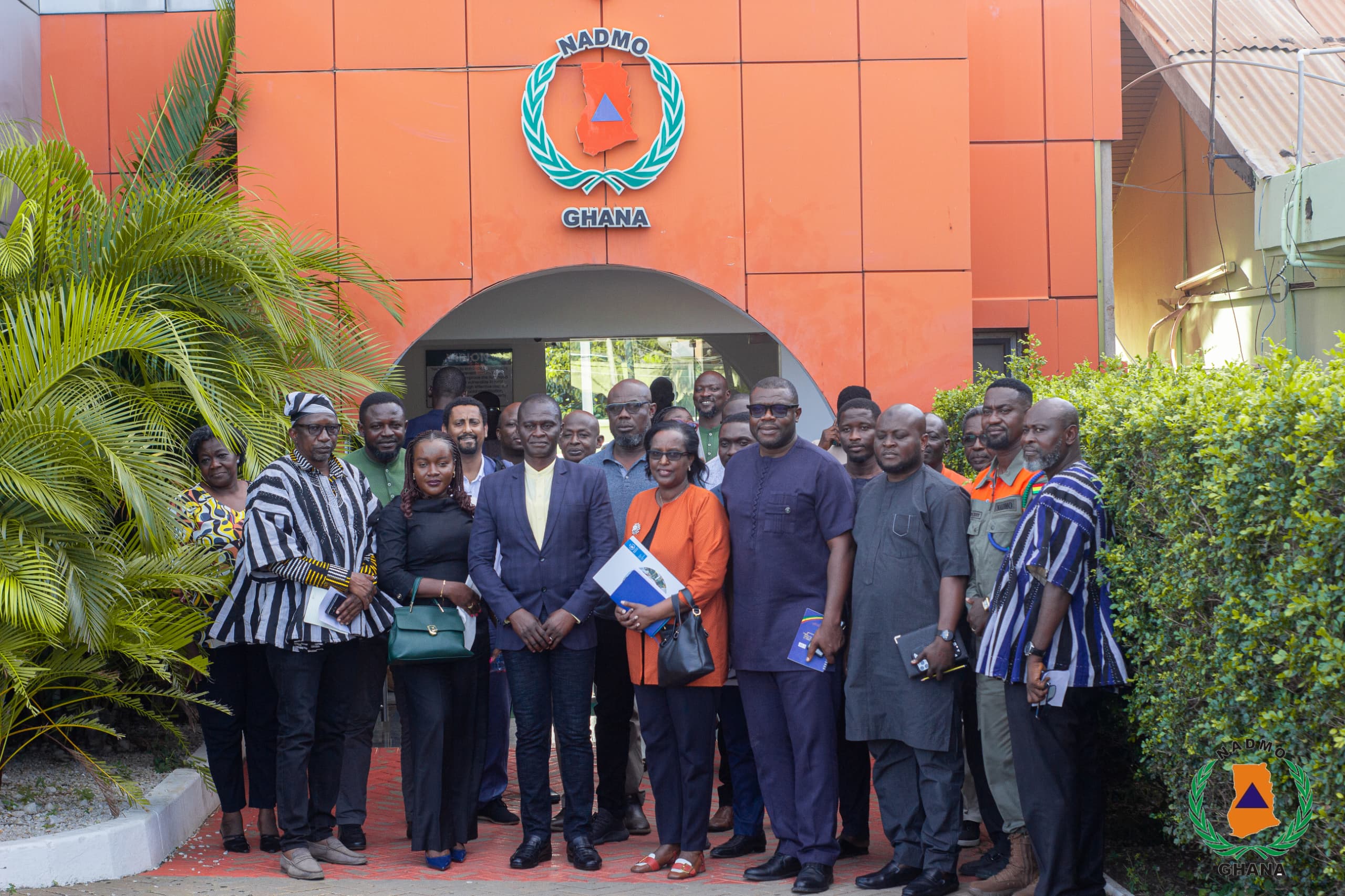
Director General of the National Disaster Management Organisation (NADMO), Major (Rtd) Dr. Joseph Bikanyi Kuyon, has called for prioritising the National Disaster Management Strategy, describing it as the most important document regarding Disaster Risk Reduction (DRR) activities.
He made the call during a well-attended Inter-Agency Working Group on Emergencies (IAWGE) meeting organised by the Disease Epidemics Department of NADMO.
He said the document, which is at its preparatory stage, needed not just technical support but financial support as well. “The most important document now is the National Disaster Management Strategy; my appeal to you as a working group is to give it all the support it needs so we know which areas to prioritise as an organisation. It will further guide all of us in our actions and inactions”, he stated.
Maj. Kuyon made it clear that for NADMO to succeed in its operations, all hands needed to be on deck to work for the common good of the citizenry.
The meeting, chaired by Madam Aurore Rusiga, the Representative and Country Director for the World Food Programme (WFP), aimed to review and discuss the best ways to implement key recommendations made by various agencies during previous quarterly meetings.
During two separate slide presentations, meeting participants were updated on the current status of key recommendations and the way forward for IAWGE.
Hon. Albert Alalzuuga Akuka, Director General for Community Empowerment and Sustainable Livelihood, was appointed Co-chair of IAWGE in all subsequent meetings.
Present at the meeting included the Deputy Director General (DDG) in charge of Operations, Hon. Teddy Addi Safori, Ahmed Rufai Bolas, DDG in charge of Technical, representatives from the UN system and some directors of NADMO.
Posted in NADMO_Articles.

The National Disaster Management Organisation (NADMO) held its first Staff Durbar at the organisation’s headquarters in Accra. The purpose of the durbar was for management to interact with employees and address key concerns.
Major (Rtd) Dr. Joseph Bikanyi Kuyon, Director General of NADMO, in his opening address, called for staff to uphold a positive attitude and commitment to their work while acknowledging the invaluable sacrifices and contributions of staff in managing disasters.
“I would like to express my profound appreciation to the staff and the regional team for your dedication and swift response to recent disasters and emergencies,” he stated.
The Director General underscored the importance of preparedness in anticipation of the heavy rainfall expected in the coming months. He emphasised that NADMO has activated its emergency response plan across all regions, municipalities, and districts to mitigate the potential impact of floods and related emergencies.
Major (Rtd) Dr. Kuyon emphasised the importance of NADMO's collaboration with other organisations to improve disaster management and response efforts. He noted that NADMO is working with the Forestry Commission to acquire chainsaws, which will assist the Operations Team in quickly clearing blocked routes caused by fallen trees during windstorms.
The Director General expressed Management’s commitment to improve staff working conditions and announced that “a committee has been established to draft a scheme of service for the organisation”.
Regarding staff promotions, the Director General acknowledged that this concern has been recognised and a committee will be instituted to address promotion matters. He highlighted recent advancements, noting that some staff members nearing retirement, specifically, those with as little as three months remaining, have been promoted as part of the efforts to motivate and recognise long-serving personnel.
Staff were also encouraged to share their suggestions regarding work and welfare issues.
Attending the Staff Durbar were Deputy Director Generals, regional officers, and NADMO staff from across the country, who joined virtually.

Posted in NADMO_Articles.

The meeting, which attracted about fifty (50) people from diverse sectors, including the UN system, also sought to strengthen coordinated multisectoral Surveillance and Information sharing for zoonotic diseases in Ghana, using the Tripartite Surveillance and Information Sharing Operational Tool (SIS OT) developed by FAO, WHO and WOAH.
Ms. Ruth Arthur, the Director of the Disease Epidemics Department at NADMO, stated in an interview that the primary objective of the four-day workshop was to enhance information sharing on zoonotic diseases. This would be achieved by developing and implementing a multi-sectoral surveillance and information-sharing plan using SIS OT.
“When you look around at our various tourism centers including the zoos, you realize that large numbers of people visit these places very often, and as a result, certain infections are picked up from these animals into our various homes which in the long run result in chronic cases that may require not only one specialized person to treat, but people with different specialties”, she stated.
Ghana, she said, was working to implement the SIS OT as part of its ongoing efforts and commitment to strengthening the One Health system and improving its capacity to prevent and respond to zoonotic diseases.
The workshop, held at Koforidua in the Eastern Region, served as a critical step toward establishing a resilient, multi-sectoral surveillance system that protects both public and animal health.
It was organised under the auspices of the Food and Agriculture Organisation (FAO).
Participants were drawn from the Ministries of Health, Food and Agriculture, Environment and Science, the Veterinary Services Directorate, the Environmental Protection Authority, the Police Hospital, the Ghana Armed Forces/Medical Directorate, and the National Disaster Management Organisation (NADMO), among others.
Posted in NADMO_Articles.

The donation was in support of victims of the recent tribal conflict in the Sawla-Tuna-Kalba District, which has forced several families to flee their homes.
The items included 10 bags of rice, 12 cartons of oil, 6 pieces of student’s mattress, 100 pieces of plastic buckets, 40 pieces of plastic basins, 400 pieces of plastic plates, 450 pieces of plastic cups, 20 pieces of poly-mats, 6 pieces of solar lamps, 3 bales of used clothing and 200 pieces of mosquito nets and other assorted goods.
Madam Fati Kine Lam, the NADMO Bono Regional Director, presented the items. She thanked the chiefs and the entire community for their support of the victims and assured them of the government's assistance.
She advised the victims to be law-abiding and called for peace between the leadership of the two tribes.
The Bono Regional Director also appealed to individuals and corporate bodies to come to the aid of the victims.
Nana Sompiitey Sansah, Lobi Hene, Subinso No. 2, who received the items, expressed gratitude to NADMO for the donation.
In attendance at the donation were Hon. Gloria Opoku Gyamfi, the Municipal Chief Executive of the Wenchi Municipal Assembly and Mr. Sulemana Mohammed, the Wenchi NADMO Municipal Director.
They joined the team on a visit to various communities, including Boadan, Botenso, and Nwoase, which are hosting internally displaced persons.
Posted in NADMO_Articles.

A delegation from Expertise France, a Consultancy firm working on behalf of the European Union (EU) paid a courtesy call to the Director General of NADMO.
The goal was to discuss how the EU can assist NADMO in the return and reintegration of Ghanaians.
The Director General assured them of the organization's readiness to partner with the EU and maintain a cordial relationship.
Present at the meeting were Hon. Albert Akuka Alalzuuga, the Deputy Director General for Community Empowerment and Sustainable Livelihood, and Mr. Kofi Osei, the Director of Migration and Reintegration.
Posted in NADMO_Articles.

The meeting formed part of efforts to gather first-hand information on the plight of displaced persons in the area following the recent Sawla conflict.
The MCE and Regional Director welcomed the Director General and his delegation and led them to communities where the displaced persons are currently being housed.
During the visit, Major (Rtd) Dr. Kuyon interacted with leaders of the affected groups and assured them of the government’s commitment to addressing their concerns and restoring normalcy.
He also paid a courtesy call on the Chief of Subinso No. 2, Nana Nangor Pantu II, to express gratitude to him and his elders for opening their communities to the displaced persons and supporting their upkeep.
Nana Nangor Pantu II welcomed the NADMO delegation and highlighted some challenges facing the community, including inadequate food supplies, lack of proper shelter, shortage of mattresses, and limited access to healthcare.
In response, the Director General assured the chief that measures would be taken to alleviate these issues and improve the welfare of the displaced persons.
The Municipal Chief Executive, Hon. Gloria Opoku Gyamfi, also pledged to deploy health personnel to the area and facilitate the registration of the displaced persons onto the National Health Insurance Scheme (NHIS) to ensure their access to local health
Present at the meeting were the Deputy Director General for Technical, Mr. Ahmed- Rufai Aggudey and the Director of Man-Made Disasters, Mr. Maxwell Emmanuel Niber.
Posted in NADMO_Articles.

The visit aimed to gather firsthand information on the recent conflict in the area and its impact on the local population.
The Director General was accompanied by senior NADMO officials, including Mr. Ahmed-Rufai Aggudey, Deputy Director General for Technical; Mr. Maxwell Niber, Director of Man-Made Disasters; Mr. Amo Yartey, Director of Inspectorate; and Mr. Mahama Zakaria, the Savannah Regional Director.
Welcoming the delegation, the Regional Minister briefed the NADMO leadership on the conflict, which began on 24th August 2025, arising from a land ownership dispute.
He explained that the disturbances had caused significant displacement; some affected persons are currently living with relatives, while others have moved into camps or fled further south, with a number crossing into Côte d’Ivoire.
Hon. Be-Awuribe expressed appreciation to NADMO for its swift response and highlighted how relief assistance had been used to ease the plight of displaced persons.
He also provided updated information on displaced populations, noting that the numbers are constantly changing due to the ongoing movement of people. He mentioned that some individuals have used the camps as transit points before departing the region or leaving the country.
The Minister further outlined some of the challenges confronting the region, including inadequate mobility resources, lack of life jackets and engine boats for disaster response, and the need for additional support to manage the crisis effectively.
In response, Major (Rtd) Dr. Kuyon assured the Minister of NADMO’s commitment to addressing the challenges despite resource constraints. He also enquired about ongoing peace efforts and the reintegration of displaced persons.
The Minister indicated that while measures had been put in place to calm tensions, reintegration would be a gradual and cautious process to avoid further escalation.
Later in the day, the Director General, accompanied by the Regional Minister and his team, paid a courtesy call on the King and Overlord of the Gonja Kingdom, the Yagbonwura. Major (Rtd) Dr. Kuyon appealed to the traditional leader to use his influence to help restore peace and stability in the area.
Describing the visit as “an eye-opener”, Dr. Kuyon reaffirmed NADMO’s readiness to collaborate with traditional authorities, regional leadership, and the government to ensure peace, stability, and the safe return of all displaced persons.
The Yagbonwura welcomed the leadership of NADMO and expressed his commitment to peace. As a gesture of goodwill and dedication to conflict resolution, he presented a white smock to the Director General of NADMO.
Posted in NADMO_Articles.

The Director General of the National Disaster Management Organisation (NADMO), Major (Rtd.) Dr. Joseph Bikanyi Kuyon and the Savannah Regional Minister, Hon. Salisu Issifu Be-Awuribe have met with a delegation from UNICEF to discuss ongoing humanitarian efforts for displaced persons in the region.
The UNICEF team, led by Mr. Osama Makkawi Koghali, UNICEF Ghana Representative, requested a detailed briefing on the conflict and response measures.
In his remarks, Hon. Be-Awuribe provided background to the conflict and explained the categories of displacement and arrangements made to support those affected. He assured the team that de-escalation efforts were yielding positive results, with recovery processes gradually taking shape.
The Minister appealed for further UNICEF support, particularly in the area of medical consumables, to strengthen the humanitarian response.
He also raised the challenge of displaced persons who prefer not to register in camps, making it difficult to account for all beneficiaries. Despite this, he commended the coordinated efforts so far, including relief support extended to displaced persons who had crossed into Côte d’Ivoire.
On his part, the NADMO Director General underscored the importance of enhanced inter-agency collaboration. He called for the establishment of a central coordination mechanism to ensure effective planning, prevent duplication of efforts, and maximise resources in managing the crisis.
Posted in NADMO_Articles.

The newly inaugurated committee comprises representatives from key institutions and agencies with expertise in disaster management.
The committee is mandated to harness this expertise in planning, coordinating, and implementing effective measures to prevent and mitigate disasters in the Savannah Region.
In his remarks, Major (Rtd) Dr. Kuyon underscored the importance of teamwork and collaboration in disaster risk reduction and response.
He urged the committee members to utilise their diverse professional backgrounds in developing strategies that would improve prevention and ensure an effective and coordinated response to disasters.
“Disaster management is not the responsibility of a single institution, but a shared duty that requires a united front. The work of this committee will be crucial in safeguarding lives, property, and livelihoods in the region,” he said.
The inauguration forms part of NADMO’s broader commitment to building resilience, fostering inter-agency cooperation, and strengthening institutional capacity for effective disaster risk management across the country.
Posted in NADMO_Articles.

He was accompanied by the Deputy Director for Technical, Mr. Ahmed-Rufai Aggudey; the Director of Man-Made Disasters, Mr. Maxwell Niber; the Director for Inspectorate, Mr. Amo Yartey; and the Regional Director, Mr. Mahama Zakaria.
Welcoming the delegation, the Sawlawura expressed appreciation for the visit and the Director General’s concern for the welfare of his people.
Major (Rtd) Dr. Kuyon noted that although relief items had earlier been dispatched to support victims of the conflict, it was necessary to be physically present to assess the situation firsthand and engage directly with stakeholders.
He further appealed to the chief and traditional authorities to support ongoing efforts to restore peace and normalcy, emphasizing the critical role of traditional leadership in conflict resolution.
The Director General and his team also toured camps where displaced persons are being sheltered.
Addressing the affected communities, he reassured them of the government’s commitment at the highest level to finding a lasting solution to the crisis.
“The President, the Minister for the Interior and all stakeholders are committed to solving the issue amicably for peace to prevail,” he assured, urging displaced persons to remain hopeful and resilient.
Posted in NADMO_Articles.

Mr. Choudhury congratulated the Director General on his appointment and described the NADMO leadership role as challenging yet essential. He also commended the organisation and other stakeholders for their prompt response to the situation in Sawla, while reaffirming the UN’s ongoing support in disaster management.
The Director General expressed appreciation to the UN for their assistance and collaboration in efforts to restore normalcy in the affected areas. He, however, raised concerns about mistrust among some inter-agency working groups, stressing that the figures NADMO releases on displaced people are not exaggerated.
“Our officers are on the ground from the regional level down to the zonal level, working diligently to gather accurate data. However, because displaced people continue to move, the numbers fluctuate frequently. Unfortunately, the inter-agency working groups tend to believe the media more than the official figures,” he noted, urging agencies to build confidence in their work.
The UN Resident Coordinator acknowledged the challenges regarding assessment, revealing that while the UN merely plays an auxiliary role and is not a government institution, it continues to work closely with national authorities.
He disclosed that a major challenge has been the reliance on government statistics for assessments, but he praised NADMO for its dedication, adding that he had received praise for the organisation’s work from various quarters.
The discussions also addressed the current and anticipated needs of displaced people, with both parties reaffirming their commitment to strengthening coordination for an effective response.
Posted in NADMO_Articles.

The team was received by the Regional Minister, Hon. Ibrahim Tia, alongside the Chief Director, Alhaji Mohammed Avorna, the Regional Police Commander, the military attaché, and the Municipal Chief Executive of Mamprugu.
Major (Rtd) Dr. Kuyon expressed gratitude to the Regional Minister for the warm reception and outlined the purpose of his visit.
“We came to the region to monitor the situation on the ground due to the Bagre Dam spillage, which affects people in the surrounding communities, and to meet NADMO staff in the region. An advance team has been here for almost two weeks to monitor and sensitize the people in the surrounding areas,” he said.
The Regional Minister, Hon. Tia, emphasized the poor condition of dams in the region. He noted that four dams were built several years ago; however, two of them, located in Nalerigu and Langbinsi, are in a deplorable state, while the other two, situated in Tinguri and Diani, have completely collapsed.
The Regional Police Commander expressed concerns about recent conflicts in Nanik, which resulted in the burning of houses and left many residents displaced. He noted that many affected individuals were unable to farm this season and urged NADMO to provide urgent support.
Additionally, he suggested that there should be closer collaboration with the agricultural sector to enhance education for farmers along the White Volta, encouraging them to harvest early before the annual dam spillage.
In response to the challenges posed by perennial flooding, Hon. Tia proposed introducing early-maturing or short-yielding seed varieties for farmers in the region.
During the visit, the delegation, accompanied by the Regional Minister, paid a courtesy call to the King of the Mamprugu Traditional Area, Nayiri Naa Bohagu Mahami Abdulai.
The Minister updated the King on the current state of the dams and other pressing issues affecting the region, which had already been communicated to the Director General.
The NADMO Director General addressed the Nayiri, assuring that efforts would be made to address the concerns that were raised. He emphasised that while some disasters are natural and beyond human control, others such as conflicts and land encroachment, are man-made and can be prevented.
"As the leader of disaster management, it is important to be on the ground to assess and monitor situations rather than simply issuing directives from the office," he stressed.
He expressed gratitude to the King and the people of Mamprugu for their hospitality and pledged to return for next year’s Damba Festival.
Posted in NADMO_Articles.

The delegation was received by Hajia Pognaa Fati Issaka Koray, Chief Director of the RCC, and Alhaji Nura Issah Dawana, Municipal Chief Executive of Wa, who represented the Regional Minister.
Major (Rtd) Dr. Kuyon underscored the crucial role of the Regional Disaster Management Committee in building resilience and ensuring disaster preparedness.
He urged the committee to hold routine meetings, identify potential disaster threats, and plan both preventive and recovery measures. He further emphasised the importance of conducting disaster management drills, stating that “the National Disaster Committee is the foundation of the country’s security.”
Members of the yet-to-be inaugurated Regional Disaster Management Committee briefed the Director General on the current disaster management situation in the region. They noted that chieftaincy disputes had largely subsided, and that monitoring for potential spillages from Bawku and the Savannah areas was ongoing, with only isolated clashes between herders and farmers reported.
The committee also highlighted a recent drowning incident in Lawra and appealed for life jackets to support NADMO officers and local communities.
Major (Rtd) Dr. Kuyon acknowledged the region's vulnerability to both man-made and natural disasters and assured them of the supply of life jackets. He also praised the strong collaboration between NADMO and the RCC, reassuring residents that “they are in safe hands.”
Alhaji Nura Issah Dawana, Wa MCE, mentioned his office’s monthly clean-up exercises as a proactive disaster prevention measure, and called for additional resources to boost this initiative.
The Director General was accompanied by Mr. Ahmed-Rufai Aggudey, Deputy Director General for Technical; Mr. Maxwell Emmanuel Niber, Director of Man-Made Disasters; and Mr. Richard Amo Yartey, Director of Inspectorate.
As part of the visit, the delegation also paid a courtesy call on the Wa Naa, Paramount Chief of the Wala Traditional Area, to formally introduce themselves and pay their respect.
Posted in NADMO_Articles.

In his address, Dr. Kuyon noted that the committee had been inactive for some time. He commended the President for reviving the initiative in line with the NADMO Act, emphasizing the importance of proactive planning and coordination in protecting lives and property.
“We now have a President who is concerned about disaster management and the safety of citizens. Going back to the Act to form these committees to meet, plan, and deliberate on disaster management is a step in the right direction,” he stated.
The Director General highlighted the significance of prevention and preparedness as the primary focus of the committee's work. "I have always believed in the value of prevention; therefore, this committee should prioritize preparedness. Let us take actions that will lead to preventive measures," he urged.
The North East Regional Minister, who chairs the committee, emphasized the importance of having regular meetings to enhance efficiency. He instructed the NADMO Regional Director to develop a timetable and establish a platform for the committee to function effectively.
“Meetings are crucial for efficiency. A monthly or quarterly schedule will enable us to convene, discuss, identify potential threats, and receive early warning signals. I expect meetings to commence as soon as possible,” the Regional Minister stated.
The inauguration of the committee marks a renewed commitment to collaborative disaster management efforts in the region.
Posted in NADMO_Articles.

The Institute for Diversity and Inclusion in Emergency Management (I-DIEM) Africa recently paid a courtesy visit to the Director General of the National Disaster Management Organization (NADMO), Major (Rtd) Dr. Joseph Bikanyi Kuyon.
I-DIEM Africa, a non-governmental organization committed to climate change, community resilience, and disaster preparedness, seeks to empower through training, information, and capacity building to enable communities especially women and children to respond to disaster effectively.
The Director General welcomed the guests and shared his vision for disaster management in the country. He emphasized the importance of preparedness and prevention by identifying risks, understanding their causes, and establishing measures for mitigation. He stated that these steps not only help prevent disasters from occurring but also minimize their impact if they do happen.
He noted that the efforts of I-DIEM Africa would play a crucial role in enhancing prevention measures and building capacity for disaster response. The Director General expressed gratitude to the I-DIEM team, led by J. Ekow Rhule, Country Director for Ghana, for their dedication to these important causes.
He also expressed his enthusiasm for developing a closer collaboration in the future.
Posted in NADMO_Articles.
The visit seeks to support Zimbabwe in adopting a whole-of-government and whole-of-society strategy that is both integrated and gender-sensitive. This approach is expected to strengthen the country’s capacity to respond to the economic, social, and protection needs of returning migrants, thereby promoting sustainable reintegration and enhancing migration governance.
Welcoming the delegation, the Director General of NADMO, Major (Rtd) Dr. Joseph Bikanyi Kuyon, expressed appreciation for the partnership with IOM and its continuous support to NADMO.
“Recovery and reintegration are an intrinsic part of disaster management, and NADMO considers it a primary responsibility,” Dr. Kuyon stated. “That is why we utilise public-private partnerships to help individuals whose lives have been disrupted while abroad, ensuring they are reintegrated into their home countries and communities.”
During the visit, Nana Ama Konadu Agyeman, Migration and Reintegration Coordinator at NADMO, delivered a presentation outlining the organisation’s role in reintegrating returnees and deportees into their communities.
The Zimbabwean delegation, in turn, commended NADMO for its warm reception and shared insights. They noted that the lessons drawn from Ghana’s model would help shape Zimbabwe’s national strategy on return and reintegration, ensuring that returnees are adequately supported and successfully reintegrated into society.
Posted in NADMO_Articles.

The Food and Agriculture Organization of the United Nations (FAO) and the National Disaster Management Organisation (NADMO), on 16th September 2025, signed an agreement on a road map to deepen collaboration on Disaster Risk Reduction and the One Health approach in Ghana.
The signing ceremony, held at NADMO Headquarters in Accra, marks a milestone in the partnership between the two institutions. The agreement seeks to strengthen Ghana’s capacity to manage risks, build resilient livelihoods, and safeguard food and nutrition security for all Ghanaians.
FAO has been supporting NADMO through its Technical Cooperation Programme (TCP) project titled “Development of Disaster Risk Reduction Strategy for Ghana.” This initiative responds to NADMO’s request for technical assistance in formulating a comprehensive national Disaster Risk Reduction (DRR) Strategy.
Building on this foundation, FAO and NADMO will collaborate under a new project funded by the United Kingdom: “One Health Knowledge Nexus: Generating Knowledge and Evidence for Decision-Makers.” The global project aims to strengthen One Health systems across multiple countries, including Ghana.
With NADMO’s mandate to coordinate One Health initiatives nationally, the collaboration underscores the importance of integrated approaches to health, food systems, and disaster risk management.
Speaking at the ceremony, representatives from FAO and NADMO reaffirmed their shared commitment to advancing resilience, protecting livelihoods, and ensuring sustainable food and nutrition security.
The Director General of NADMO, Major (Rtd) Dr. Joseph Bikanyi Kuyon, in his remarks, expressed excitement about the partnership. He added that the road map will serve as a blueprint in the areas of Disaster Management and Disaster Risk Reduction.
“One aspect I would like you to focus on is the formation of a comprehensive document on the three phases of disaster management, especially the preparedness phase. This will give us a good foundation”. He added.
The FAO representative to Ghana, Priya Gujadhur, commended the Director General for the clear vision and leadership for the organisation, and stated that through the foundation of Agricultural Early Warning Systems, they are actively working in six districts in the North at the grassroots level, protecting communities from the effects of climate.
The partnership is expected to contribute significantly to Ghana’s national priorities, aligning with the Sustainable Development Goals (SDGs) and FAO’s Strategic Framework for better production, better nutrition, a better environment, and a better life.
Present at the meeting were the Deputy Director General in charge of Finance and Administration, Dr. Lutfia Saeed Jamal; Deputy Director General in charge of Technical, Ahmed-Rufai Afarahim Aggudey; Mrs. Ruth Arthur; Director, Disease Epidemics; Esther Owusu, Head of policy planning, monitoring and evaluation and some representatives from NADMO and FAO.
Posted in NADMO_Articles.

The ongoing national exercise forms part of the organisation’s drive to reactivate the DVGs, which were inactive for several years until their recent reactivation.
The session brought together Regional and District Directors of NADMO, disaster coordinators and key stakeholders, with a strong focus on strengthening community-based disaster response.
In his opening remarks, the Deputy Director General for Livelihood Support and Community Empowerment, Hon. Albert Alalzuuga Akuka, emphasized that the initiative is not just a program, but a national movement to rebuild local resilience and rekindle the spirit of volunteerism.
This movement places NADMO in every home, school, and community, empowering citizens to lead in disaster preparedness and response.
He said the reactivation plan includes three key volunteer structures: Community-Based Groups, Institutional Volunteer Clubs (in schools and religious institutions), and Agency and Civil Society Volunteers.
The Oti Regional Minister, Hon. John Kwadwo Gyapong, emphasized the importance of having a well-trained and dedicated volunteer force to mitigate the effects of disasters.
“Disasters can strike at any moment. We must have a well-prepared and dedicated team of volunteers who can respond effectively,” he said.
Hon. Gyapong outlined three key goals of the reactivation effort: enhancing disaster preparedness and response capabilities, fostering community resilience and sustainability, and providing swift support to affected communities.
He commended NADMO’s leadership and encouraged all stakeholders to remain committed to the success of the volunteer reactivation initiative.
The Volta Regional Minister, Hon. James Gunu, also noted that the region has experienced several disasters in recent years, including rainstorms and tidal waves.
He said, “By the grace of God, the President has recently cut the sod for the construction of a sea defence project in Ketu South, which will bring permanent solutions to these perennial problems.”
He also expressed his gratitude to NADMO, stating, “They have always been with us since the disaster”.
The Minister also urged District and Assembly leaders to take issues of disaster management and sensitization seriously, emphasizing the role of local leadership in building a resilient region.
Posted in NADMO_Articles.

The inauguration, held at the Ministry’s Conference Room in Accra, formally mandates the Committee to ensure that adequate facilities are available for relief, rehabilitation, reconstruction, and recovery in the event of a disaster.
The Committee will also collaborate with public institutions, non-governmental organisations, and donor agencies to secure financial support and logistics necessary for effective disaster management, as well as perform other functions related to its mandate.
The Committee’s responsibilities also include coordinating and managing national disasters, collaborating with relevant government agencies, and securing assistance from public or private institutions to deal with disasters.
The Minister emphasized that investing in preparedness is far less costly than recovery, urging “a participatory approach that leaves no community behind”. He referenced the 2023 Akosombo Dam spillage, which displaced thousands, as a reminder of gaps in preparedness and coordination.
The Honourable Mohammed-Mubarak assured the Committee of the government’s full support, pledging to empower NADMO with the necessary resources to deliver on its mandate.
Posted in NADMO_Articles.

In a heartfelt demonstration of unity and support, the National Disaster Management Organization (NADMO) spearheaded a humanitarian effort in the Savannah region.
This initiative, led by the esteemed Director General, Hon. Eric Nana Agyemang Prempeh, aimed to provide much-needed relief to the flood affected victims.
The essential relief items presented by NADMO, symbolizes the organization's commitment to alleviating the suffering of the people in the region.
These items were presented to the Regional Coordinating Council on behalf of the affected individuals, emphasizing the organization's dedication to serving the community.
The Director General, Hon. Eric Nana Agyemang Prempeh, played a pivotal role in ensuring the success of this noble mission.
The heartwarming endeavor saw the participation of key figures, including Municipal and District Chief Executives (MMDCEs) and the Regional Coordinating Director.
Their active involvement reflected the collaborative spirit of the relief efforts and conveyed the message that adversity can be met with unity and compassion.
Furthermore, the NADMO team embarked on a mission to visit Safe Havens in Buipe.
This gesture not only demonstrated NADMO's dedication to the well-being of the people but also underscored the organization's commitment to fostering safety and security of the victims.
The visit to Safe Havens served as a reminder of the essential role these establishments play in times of crisis and the importance of ensuring their resilience.
The team also paid a courtesy call on Buipe Wura Jinapo, recognizing the vital importance of maintaining strong bonds with local leadership. This visit affirms the organization's respect for traditional leaders and its commitment to building and strengthening partnerships for the greater good of society.
NADMO's benevolent actions in the Savannah region exemplify the power of collective action and compassion in times of crisis. The relief items distributed and the visits to Safe Havens and local leadership are emblematic of NADMO's tireless dedication to safeguarding the well-being and safety of the people.
As a beacon of hope, NADMO continues to stand by the affected individuals, demonstrating that, in unity, we can overcome even the most challenging of circumstances


Posted in NADMO_Articles.

Nnamdi Iwuora, a Senior Programme Manager at the International Organization for Migration (IOM), has stated that IOM is prepared to continue supporting the National Disaster Management Organization (NADMO) to improve its effectiveness and efficiency.
He made this assurance during a courtesy visit to NADMO's Headquarters on Tuesday, March 18, 2025.
Mr. Iwuora was warmly welcomed by Hon. Albert Alalzuuga Akuka, the Deputy Director General in charge of Community Empowerment and Sustainable Livelihood. He stated that IOM is working to engage in broader discussions with NADMO. The goal is to strengthen the existing partnership between the two organizations to better serve the interests of migrants.
He mentioned that plans are in place to offer NADMO the essential technical support needed to improve its Emergency Operation Centres across the country. He highlighted that the IOM is actively developing emergency preparedness and response programs aimed at training officers and enhancing their capabilities, all to promote a more resilient society.
The Honorable Albert Akuka expressed his gratitude for the support that the IOM has provided to NADMO over the years. He assured Mr. Nnamdi Iwuora of the organization's full cooperation in all future endeavours.
He praised the initiatives of the IOM and requested the implementation of measures to ensure that migrants from other countries are effectively integrated into Ghanaian society.
Mr. David Darko, a Senior Project Officer at IOM, accompanied Mr. Iwuora during this meeting.
Posted in NADMO_Articles.

The Director General of NADMO, Major (Rtd) Dr. Joseph Bikanyi Kuyon, held an emergency meeting with all NADMO Directors in the Greater Accra Metropolitan Area (GAMA) at the NADMO Headquarters in Accra.
The meeting was convened to discuss flooding preparedness in GAMA and prompt directors to activate the Flood Risk Contingency Plans for the Metropolitan, Municipal, and District Assemblies (MMDAs) in anticipation of this year's rainfall.
The contingency plan outlines the measures designed to mitigate flooding across all MMDAs effectively.
The meeting also discussed the situational report of the heavy rains on Thursday, March 13, which resulted in flooding in several areas of Accra.
The Director General highlighted the importance of enhancing the skills of data collectors to improve disaster data collection, which is essential for informed decision-making.
He commended the directors for their hard work and expressed satisfaction with the established systems in place for flood response.


Posted in NADMO_Articles.

On October 24, 2023, the Education Minister, Hon. Yaw Adutwum, led a distinguished delegation from his ministry to conduct an official visit to areas affected by dam spillage.
Mr. Seji Saji, the Deputy Director General of Technical and Reforms at NADMO who received the delegation, extended a warm welcome and acknowledged the immense challenges posed by the situation but highlighted NADMO's relentless efforts, with support from various Emergency Response Organizations, to provide relief and hope to the affected victims.
He emphasized NADMO's commitment to strengthening society's capacity for disaster prevention and management, enhancing the well-being of rural communities, and promoting social mobilization and employment generation.
Hon. Yaw Adutwum, the Education Minister, emphasized the necessity of assessing the impact of the dam spillage on education in the affected area. He also stressed the President's concern for ensuring continued education for the victims, even in their temporary shelters.
The Minister pledged to offer any necessary assistance to ensure that schools can operate without disruption despite the incident.
In his remarks, the Acting District Planning Officer, Mr. Selom Kpongor, pointed out that while some schools had been affected, others had served as safe havens for those affected by the disaster. This situation underscored the need for measures to ensure that school facilities would be available for use once the affected victims were resettled.
During the visit, the Minister and his delegation generously donated 440 bags of rice along with other supplies to be distributed among the victims. Notable attendees at the ceremony included the Volta Regional Minister, Deputy Education Minister, and Director General of the National Schools Inspectorate Authority, along with various heads of sectors from the Ministry, NADMO officers, the Municipal Chief Executive of North Tongue and other supporting agencies at the Emergency Operation Centre.


Posted in NADMO_Articles.

The National Disaster Management Organisation, (NADMO) led by the Director General, Hon. Eric Nana Agyemang Prempeh, took swift action in response to flood-affected victims in the Bono East Region. The region is part of areas impacted by significant flooding following the recent dam spillage, causing distress and hardships for the local population.
In addressing the situation, NADMO initiated a relief effort by presenting essentials to the affected communities in the Bono East through the Regional Minister.
Items Distributed
The relief items distributed by NADMO were carefully chosen to address the immediate needs of those affected by the flooding. These items included a variety of food supplies to ensure access to nourishment, buckets for safe water storage, mosquito coils to prevent vector-borne diseases, clothing to help people replace their soaked and damaged clothes, and blankets to provide warmth and comfort during a difficult time.

Importance of Swift Relief
Hon. Eric Nana Agyemang Prempeh emphasized that while NADMO is committed to long-term efforts to restore the lives of those affected by the flooding, these immediate relief measures were essential to mitigate the dangers associated with the ongoing floods. Swift distribution of essential items helps alleviate suffering and provides affected communities with the support they urgently require. Therefore these interim measures represent NADMO's dedication to the welfare of the people and the region as a whole.
NADMO's efforts in the Bono East Region exemplify its mission to manage disasters, coordinate resources, and enhance community resilience.
The Director General and his delegation also paid a courtesy call on the Omanhene of the Yeji Traditional area who doubles As President of the Bono Regional House of Chiefs.
Also present at the event to receive the relief from NADMO were Municipal and District Chief Executives (MMDCEs), as well as Regional and District Directors and Staff of NADMO.


Posted in NADMO_Articles.

The National Disaster Management Organisation (NADMO) with its vision to enhance the capacity of society to prevent and manage disasters and to improve the livelihood of the poor and vulnerable in rural communities has on Monday 8th, May 2023, with the Volta River Authority (VRA) held an opening ceremony of fullscale Simulation on the VRA Emergency Preparedness Plan at the VRA Headquarters in Accra.
The exercise coordinated by NADMO with support from various stakeholders in the emergency response fraternity dubbed: VRA EPP 2023 Exercise ‘’DA WOHO SO’’, will allow VRA to assess and improve its emergency response plans, procedures, and capabilities and also to test its readiness to deal with emergencies that cause the release of a significant quantity of water from the Akosombo and the Kpong Dam and how it impacts lives and property.
Mr. Kwaku Wiafe, Director of Engineering Services, VRA, in a welcome remark, noted that global trends in climate change and their anticipated impacts make it necessary for them as hydropower plant operators to enhance emergency preparedness. He said ‘’according to the intergovernmental panel on climate change in 2021, Climate Change is expected to increase the frequency and intensity of compound events occurring simultaneously or sequentially, such as the combination of storm surge, extreme rainfall, and river flooding and These predictions to dam operators indicates the increased possibility of spilling and the potential impact on over 3,000 people downstream of the dams. Therefore VRA’s serious approach to this exercise.’’

Beth Simek, the representative of the US Embassy and the North Dakota National Guard commended efforts on collaborations from various stakeholders and team members for planning such an important exercise. She noted that the US Embassy and the North Dakota National Guard would continue to give their expert support on exercises like this for a collective gain in promoting disaster risk reduction.
Hon. Eric Nana Agyemang Prempeh, Director General of NADMO, in a statement, emphasized that ‘’ the government agency responsible for dealing with disasters and similar emergencies in Ghana is the National Disaster Management Organization (NADMO). Aside from its core mandate of coordinating all resources during emergencies, the organization requires all agencies to establish emergency preparedness and response plans under Law 216 (Act 927). This law obliges agencies to simulate their plans jointly with NADMO therefore the management of VRA abides by the laws of the country and for that reason, I would like to congratulate them and take this opportunity to encourage all agencies to emulate them.
In a keynote address by the Deputy Chief Executive in charge of Engineering and Operations, Ing. Edward Ekow Obeng-Kenzo, he stated that the EPP is therefore designed to provide early warning of any potential disaster and manage the response to minimize effects on life and property in communities downstream. He further noted that a significant benefit of the exercise is that the lessons will help manage other similar emergencies.

Mr. Seji Saji, Deputy Director General in Charge of Technical and Reforms, NADMO, expressed gratitude to the planning committee drawn from various agencies and reiterated that the VRA EPP 2023 Exercise ‘’DA WOHO SO’’ is a week-long activity with a series of events at various communities, Ada, Mepe, Atimpoku, etc. earmarked for the main simulation on 11th May 2023.
Mr. Seji Said, the simulation exercise would be characterized by a total evacuation demonstration, testing the efficiency of Early warning, and ensuring the designated safe havens befit the purpose.
Other key stakeholders at the Event were Ghana National Fire Service, Ghana Police Service, Ghana Navy, Ghana Ambulance Service, Ghana Armed Forces, Ghana Water Company, Signal Bureau, National Security, North Dakota National Guard, and the US Embassy.


Posted in NADMO_Articles.

Drawn from different stakeholder organizations in the area of managing disasters and similar emergencies, about 60 experts were engaged at the Marriott Hotel in Accra on 19th April 2023 to participate in sharing their expert experience in a critical disaster risk reduction exercise.
The workshop marks the inception of a yearlong process intended to unearth the challenges of Disaster management and risk reduction in Ghana. It would also offer the PDC and the local technical support team from key agencies to diagnose Ghana’s disaster management mechanisms to profess recommendations and actions.
In a welcome remark by the Director General of NADMO, Hon. Eric Nana Agyemang Prempeh, he emphasized that NADMO in the past few years, renewed its commitment to devising strategies that facilitate effective engagement with all stakeholders in efforts to prepare and respond appropriately to disasters, therefore, this engagement is one of such efforts to ensure comprehensive stakeholder input into the plans and strategies for disaster management.
 The Director General also said ‘’ NADMO maintains the view that measures that enhance the ability to have access to sufficient data that speaks to what will happen, when it will happen, how it will happen, where it will happen, who will be impacted and what is to be done to reduce the impact on the vulnerable population is critical. In line with this, NADMO through the United States Embassy is collaborating with the Pacific Disaster Centre (PDC) to undertake a capacity-building exercise on the use of the Disaster Aware Platform, which will be useful for the twelve (12) months National Disaster Preparedness Baseline Assessment for Ghana. ‘’
Beth Simek, the representative of the US Embassy at the workshop, also noted that her outfit would continue to collaborate with NADMO and its partners in ensuring effective disaster risk reduction for sustainable development to make Ghana a safer place to live therefore their support is purposely to enhance preparedness.
Steve Recca, Humanitarian Assistance Program Advisor from the Pacific Disaster Centre in a remark, hinted that the exercise forms part of measures to equip institutions and nations with accurate data for effective Disaster risk reduction around the world. This he also said would go a long to enhance effective and efficient preparedness.
Also, present at the ceremony were Mr. Eric Asuman, Director General, Ghana Meteorological Agency (GMET), Col. Joseph Kelvin Merdiemah, Director Centre for Early Warning, Dr. Winifred Nelson, Director, Development Coordination Division, Col. Yehuzu Salifu, Director Army Liason, Joseph Green, PDC, Deputy Director Generals of NADMO, Mr. Seji Saji, Mr. Saibu Mahama.


Posted in NADMO_Articles.

Following the recent earth tremors recorded in the nation, the government of Ghana through the National Disaster Management Organisation has tasked stakeholders to lead in ensuring a harmonious collaboration to prevent or mitigate the impact of disaster especially inevitable disasters like the earthquake.
The two weeks strategic exercise is in partnership with the US Embassy and facilitated by the North Dakota National Guard from the United States to equip NADMO and its collaborating agencies with the capacity to manage disasters through the building of an effective Incident Command System for the effective and prompt response to the earthquake and similar disasters when they occur. The workshop is expected to have detailed illustrations of operations at disaster scenes coupled with a full-scale simulation exercise on the field to practically test the capabilities of response institutions.

Opening the Workshop on 13th June, 2022 by NADMO’s Deputy Director-General in charge of Technical and Reforms, Mr. Seji Saji, emphasized that the recent tremors necessitated this exercise which the president of the republic, H.E Nana Akufo Addo is highly interested in to save lives and livelihoods.
He further mentioned that it is imperative to test the various Standard Operating Procedures of various institutions to identify existing Gaps to strengthen them to manage and respond promptly and effectively to multi-hazards.
Collaborating Institutions were drawn from NADMO, Fire Service, Ghana Armed Forces (48 Engineers Regiment), Ambulance Service, Police Service, National Security, National Communications Authority, Ghana Health Service, Geological Services, and Volta River Authority amongst others.
Also present at the workshop were LTC Mark MeEvers, Leader of the North Dakota National Guard, NADMO’s Deputy Director-General in charge of Operations, Mr. Abu Ramadan, LT. Col. Abdul-Bashiru Issah (Ghana Armed Forces Joint Operations and Planning), and Dr. Forster Ansong-Bridjan AG. Director of Operations, (National Ambulance Service), DSP Francis Oppong Agyare, (Emergency Command Centre, Police HQ), DO1 Joseph Kofi Forson, AG. Deputy Director of operations (National Fire Service)


Posted in NADMO_Articles.

The government in collaboration with the International Organization of Migration, the German Cooperation Agency and the Ghanaian-German Centre for Jobs and Migration and Reintegration has organised a 2-day training session for NADMO staff on 10th and 11th May 2021.
As part of NADMO's efforts to equip staff with knowledge on effective disaster management, the department of migration in NADMO has engaged with international organisations to train staff on how to handle and provide relief supports to returnees.
Deportation is at the peak of its wave as millions of people are deported from different countries globally. Most migrants give an account of what they went through before deported to their home countries; migrants are tortured, killed, raped and forced to return through dangerous zones. Deportees find it difficult to relate to their family due to their traumatic experience and stigmatisation from society.
According to the Director-General of NADMO, Mr Eric Nana Agyemang-Prempeh said, " the sufferings and defenselessness that majority of Ghanaian forced returned migrants experience cannot be overstated.
"They usually arrive with heightened risk owing to their vulnerabilities, the constant narrative of the challenges that usually characterise the returned process; from detention centres from host countries to post-arrival in Ghana reveals that the good number of them arrive in Ghana with practically nothing to depend on for their livelihood."
According to Robert Keto, the Psychosocial Project Assistant of IOM, migrants who return have right, however, unhealthy migrants cannot contribute to the country's development. Therefore returnees need support emotionally, physically and mentally.
The IOM in collaboration with World Health Organisation(WHO) has put much effort to support returned migrants and related issues. IOM continues to train governments and also reach out to migrants who are traumatised.
 The Director-General of NADMO revealed that "the government does not support irregular migration but it's our aim to that our citizen is handled with much respect and dignity. In our quest to restore the psychosocial of these vulnerable, forced returned migrants, psychosocial aid has become an important equation in the reintegration process."
"Given this, I give it a maximum priority to the training of NADMO staff to equip them to manage victims of disasters and forced returned migrants more efficiently."
Article 1 and 5 of the Declaration of Human Rights(UDHR) states, "All human beings are born free and equal in dignity and rights. They are endowed with reason and conscience and should act towards one another in a spirit of brotherhood".
Article 5 - No one shall be subjected to torture or cruel, inhuman or degrading treatment or punishment.
The Declaration would transform and inspire countries from refraining from torturing immigrants, also protecting and promoting human right and basic freedoms in host countries.
Notwithstanding, there have been several cases of maltreatment of migrants in various detention centres across the world, peaceful dialogues and measures are discussed to end these acts.
"There are many ways of tackling issues such as through consensus and compromise and the United Nations has laws and international diplomacy which we use to solve some of the problems. That is why we are taking steps to ensure that the right things are done,” he said.
Posted in NADMO_Articles.

The participatory assessment of flood-related disaster prevention and development of an adapted coping system in Ghana (PARADeS) project is a collaboration between the University of Bonn (U-BN), University of Freiburg (U-FR), University of Applied Sciences in Magdeburg (HS-M), and Flood Competence Center (HKC) of Germany and the West African Science Service Centre on Climate Change and Adapted Land Use (WASCAL), Water Resources Commission (WRC) and National Disaster Management Organization (NADMO) of Ghana. The project is sponsored by the Federal Ministry of Education and Research of Germany.
The aim of the project is to contribute to enhancing Ghana’s national flood disaster risk reduction and management strategy by investigating key mechanisms (drivers, pressure, state, impacts, and response), existing flood risk and disaster management, governance-policy, human-water interaction, development of scenarios, action plans, and feasible and sustainable measures.
As the organization with the mandate of managing disasters and similar emergencies in the country, the role of NADMO in the successful implementation of the project cannot be overemphasized. NADMO is contributing to the project from the National to the district level with Madam Charlotte Nana Norman (Director for Climate Change Adaptation and Disaster Ri
The project is composed of a combination of research, development, and institutional strengthening activities. The project will be demonstrated in three case study areas at the definition stage:
- Accra – urban-runoff and coastal floods
- Kumasi – urban-runoff and river floods
- White Volta river basin – river floods
As part of the project's research component, NADMO is seeking the views of the general public on flood prevention and flood awareness through the administration of the questionnaire (attached). NADMO collaborated with WRC and HKC for the online questionnaire dissemination and field surveys in Ghana.
Click hereto read from the source
Posted in NADMO_Articles.

H.E Stephanie S. Sullivan, Ambassador of the United States of America to Ghana, on Friday, April 16, 2021, paid a courtesy call on the Director-General of NADMO, Hon Eric Nana Agyemang-Prempeh. The meeting took place at the Headquarters of the National Disaster Management Organisation in Accra.
Also part of the delegation were officers, LTC Mark Mcevers, North Dakota National Guard State Partnership Program Director for Ghana-Togo-Benin, Maj. Jarrod R. Simek, Ghana-Togo-Benin Regional Bilateral Affairs Officer, and Kevin Brown, Supervisory Program Officer.
key issues deliberated at the meeting focused on Disaster prevention, preparedness, communication, and response.
Hon Eric Nana Agyemang-Prempeh, in his capacity as the Director-General of NADMO, used the opportunity to highlight the Government’s commitment led by President Nana Addo Dankwa Akufo-Addo with regards to disaster management, particularly earthquake, flood, and fire outbreaks in the country.
He expressed his appreciation to the North Dakota National Guard for their continuous support and commitment to NADMO’s operations especially in the area of simulation exercises, particularly the 2018 Earthquake full-scale and tabletop simulation exercises.

The Ambassador used the opportunity to enquire about the status of the perineal floods in the Northern Region of Ghana, and the Director-General in response enumerated the Government's initiative and construction of the Pwalugu dam project with the assurance to her that Nadmo would keep her updated with developments.
The Ambassador also promised to work closely with NADMO to find solutions to the country's disaster problems, and she urged NADMO Ghana to collaborate with neighboring countries on disaster issues.
Also present at the meeting were Madam Charlotte Nana Norman, Director- Climate Change Adaptation DRD, and Mr. Nana Asafo-Adjei, Director-International Relations and Protocol.
Posted in NADMO_Articles.

On Friday, 19th March 2021, His Excellency the President and Commander in Chief of the Ghana Armed Forces, Nana Addo Dankwa Akufo-Addo paid a historic visit to the Headquarters of the National Disaster Management Organization in Accra.
The President was there to present forty (40) vehicles comprising one (1) Toyota Camry, one (1) Toyota Haice Clinical Ambulance , one (1) Mercedes Benz Rescue Ambulance, one (1) payloader, five (5) Toyota Landcruiser Prados, and thirty (30) Toyota Hilux pickups to the National Disaster Management Organisation (NADMO).
Prior to this ceremony, Government had already distributed motorbikes to all the sixteen (16) regions and to the two hundred and sixty (260) metropolitan, municipal and district secretariats of NADMO.
It is worthy to note that, in the course of next month, thirty-two (32) additional pickups will be presented to augment further the fleet of NADMO.
The visit of His Excellency is the first time a sitting President has paid a visit to the organization since it’s inception. This singular gesture re-affirm Mr. Presidents commitment to disaster management.
The Director-General, Hon. Eric Nana Agyemang-Prempeh in his remarks expressed his profound gratitude to His Excellency the President Nana Addo Dankwa Akufo-Addo for his tremendous support for the organization enumerating the various successes achieved as a government under disaster management.
Present for the event were the Interior Minister, Hon. Ambrose Dery , the Army Commander Major General Thomas Oppong Peprah , Deputy Chief of Staff Alhaji Fawz Ali , other Service Chiefs as well as management and staff of the organization.
Posted in NADMO_Articles.

Director-General of the National Disaster Management Organisation (NADMO), Hon. Eric Nana Agyemang-Prempeh has said that the organization was working to meet and strategize with the ministries of Housing and Local Government Development to help find a lasting solution to the incessant cases of fire outbreak within the Kumasi Metropolis.
The Ashanti Regional capital, Kumasi, has within the last one week, recorded about five (5) destructive fire cases.
Areas affected included the Kwame Nkrumah University of Science and Technology (KNUST), Suame Magazine, Aboabo and Dagomba Line.
Properties worth several millions of Ghana Cedis have been destroyed. The various District NADMO teams have so far visited the affected areas to assess the extent of damage.
Posted in NADMO_Articles.

Celebrating this year’s international day for disaster risk reduction in Ghana, the National Disaster Management Organisation with its partners, Green Africa Youth Organisation (GAYO), the Africa Youth Advisory Board for Disaster Risk Reduction, and the UNESCO Office in Accra-Ghana, marked this year’s celebration with a competitive but a very educative quiz competition across three zones in the country.
The purpose of marking the celebration with a quiz was to inculcate children and youth as important stakeholders whose meaningful involvement in the disaster risk reduction (DRR) process can contribute substantially to reducing the risk of disasters and building the resilience of society, meanwhile the International Day for Disaster Risk Reduction (IDDRR) is a day set aside by the United Nations (UN) to promote a global culture of risk-awareness and disaster risk reduction (DRR) which usually takes place on the 13th of October of each year.
This day is meant to show how people and communities around the world are reducing their exposure to disasters and raising awareness on the importance of reducing risks.
In a remark delivered by the Director-General of NADMO, Hon. Eric Nana Agyemang-Prempeh at the grand finale on Ghana Broadcasting Corporation’s What Do You Know TV program said ‘’ In line with my ‘’Catch Them Young’’ initiative, we seek to get the knowledge on disaster-related activities to permeate the whole of our society so we can know what to do in the face of the occurrence of any of the hazards.
This Quiz is to equip and test young people’s knowledge of disaster risk reduction and its linkages to sustainable development. The quiz seeks to inculcate disaster risk reduction in children to serve as change agents in their communities.’’
Defending champions Tepa Senior High School won the 2020 IDDR What Do You Know Quiz Competition for the second time, attributing their success to good teamwork by their Disaster Management Club and Patron Mr. Kankam. They competed with Serwaa Nyarko Senior High School who were winners from the middle zone, SAMMO Senior High School, winners from the Southern zone, and Bolgatanga Senior High School, winners from the Northern zone.
In a key remark by the Representative of UNESCO to Ghana, Mr. Abdourahamane Diallo, he said ‘’ The United Nations Educational, Scientific and Cultural Organization (UNESCO), recognizes that education is fundamental to building a culture of safety, and disaster-resilient communities. Education also takes various forms, such as formal, informal, non-formal, and continuing education. Learners may be children, teachers, parents, community leaders, or government officials. UNESCO also believes that young people can be meaningfully involved in DRR processes when their capacity to do so is developed and strengthened. Their capacity can be built through activities that encourage learning such as quiz competitions or involving them in awareness-raising campaigns.’’
Also present at the event were Mr. George Ayisi, Director of Communication-NADMO, Betty Osei Bonsu, Program Officer for GAYO as well as Heads of various competing schools.
Posted in NADMO_Articles.

October 13 every year is observed worldwide as the International Day for Disaster Risk Reduction 2020, a day set aside to promote a global culture of disaster risk reduction. The day serves as an opportunity to acknowledge the progress being made toward reducing disaster risk and losses to lives, livelihoods and health in line with the Sendai Framework for Disaster Risk Reduction 2015-2030 adopted at the Third UN World Conference on Disaster Risk Reduction in Japan in March 2015.
In 2016, the UN Secretary-General launched “The Sendai Seven Campaign” to promote each of the seven targets over seven years. The 2020 target is Target E: “Substantially increase the number of countries with national and local disaster risk reduction strategies by 2020” which lays the foundation for the implementation of the Sendai Framework and is closely linked with have Priority for Action 2: “Strengthening disaster risk governance to manage disaster risk.”
In keeping with the day’s focus on the impact that disasters have on people’s lives and well-being, this year’s celebration is under the theme "Disaster risk governance". Good disaster risk governance can be measured in the lives saved, reduction in the number of disaster-affected people, and reduced economic losses.
In achieving good disaster risk governance, the National Disaster Management Organization (NADMO), together with its key partners has implemented disaster risk reduction strategies to manage and reduce existing levels of risk and to avoid the creation of new risk. In addition to the establishment of the National Platform for Disaster Risk Reduction (DDR) and Climate Change Adaptation (CCA), another significant progress made is the creation of Regional and District Platforms for DDR and CCR headed by all Regional Ministers and District Chief Executives in their respective Regions and Districts.
The objective of the Regional and District Platforms is to promote effective community participation and ownership in disaster management at the community level. Through these platforms, the capacities of community members are built on policies relating to the prevention, mitigation and response to disasters.
As the world marks the International Day for Disaster Risk Reduction, it is critical that the Regional Ministers who function as chairmen of the regional platforms, supervise and support the District Platforms to implement the Disaster Risk Reduction and Climate Change Adaptation to make their communities more resilient to disasters.
A major progress of decentralizing the concept of disaster risk reduction is the introduction of the new NADMO Act, 2016 (Act 927). The Act has helped to decentralize and strengthen the operations of the Organization in order to manage disasters more efficiently at the local level through the creation of national, regional and district committees on national disaster management. We would like acknowledge the Parliamentary Select Committee on Defense and Interior for playing a critical role in drafting the regulation for the implementation of the Act.
As part of this year’s celebration, NADMO in partnership with the Africa Youth Advisory Board on Disaster Risk Reduction and Green Africa Youth Organization is organizing a quiz competition to equip and test young people’s knowledge on disaster risk reduction and its linkages to sustainable development. The quiz seeks to inculcate disaster risk reduction in children to serve as change agents in their communities.
Posted in NADMO_Departments.
Functions
- Engage in Livelihoods Analysis, food security assessment and alternative livelihood support to Disaster Victims, vulnerable groups and Hazard Prone Communities.
- Responsible for building Data Base of Hazards (agronomic Hazards) that may impact food security situation in the country
- Contribute to food and nutrition situation analysis towards humanitarian intervention
- Advice on programs and implement initiatives towards employment generation and poverty reduction of disaster victims and people living in disaster prone communities.
- Build capacity of Disaster Volunteer Groups (DVGs) in employable skills and support these groups with environmentally sustainable livelihoods intervention
- Create and implement alternative livelihoods intervention programs for communities whose major livelihood sources pose the risk of environmental degradation and pollution of water bodies.
Posted in NADMO_Articles.
The National Disaster Management Organisation (NADMO) in conjunction with other security agencies such as Ghana Immigration Service, the Police Service, Bureau of National Investigations and the Ghana Health Service on Tuesday 13 March, 2018, welcomed and received some Ghanaian deportees from the United States of America and Libya at the Kotoka International Airport in Accra
The deportees, most of who were in pensive moods, were taken through the necessary registration exercises after which they were assisted with tokens to help them go back to their respective destinations.
They were also taken through series of counseling upon arrival at the airport.
This move was to help the deportees identify themselves with their families and also help them integrate better into the society.In all, a total of Eighty Six people (86) were registered from the US and One Hundred and Six (106) people from Libya.
The team from the NADMO headquarters was led by Gavivina Tamakloe, Director in-charge of Relief and Reconstruction Department.
Posted in NADMO_Articles.
NADMO together with other security agencies such as the Ghana Immigration Service, Police Service, Bureau of National Investigations, Ghana Health Services, amongst others on Thursday March 29, 2018 were at the Kotoka International Airport to welcome and receive and some Ghanaian deportees from the United Kingdom.
This gesture was to help the Deportees identify themselves with their families and also help them integrate better into the society.
A total of 10 people were registered upon arrival at the Airport from the UK.
The team from the NADMO headquarters was led by Mr. Gavivina
Tamakloe, Director in-charge of Relief and Reconstruction Department.
Posted in NADMO_Articles.
NADMO together with other security agencies such as the Ghana Immigration Service, Police Service, Bureau of National Investigations, Ghana Health Services, amongst others on Thursday March 29, 2018 were at the Kotoka International Airport to welcome and receive and some Ghanaian deportees from the United Kingdom.
This gesture was to help the Deportees identify themselves with their families and also help them integrate better into the society.
A total of 10 people were registered upon arrival at the Airport from the UK.
The team from the NADMO headquarters was led by Mr. Gavivina
Tamakloe, Director in-charge of Relief and Reconstruction Department.
Posted in NADMO_Articles.
 Following reports of a fire incident at Klagon, a suburb of Tema on 25th March, 2018 which claimed the lives of 3 children, a team from the NADMO Headquarters led by the Deputy Director General, Technical and Reforms, Mr. Seji Saji visited the residence of the family of the 3 deceased children to commiserate with them.
According to the report, at about 5:30am, there was a fire outbreak at Klagon, which completely burnt down a wooden structure (Kiosk) housing the children and personal belongings of the family.
Narrating the unfortunate incident, the Assemblyman for the area, Mujeeb Kutia welcomed the delegation and said the fire was caused by a lit candle being used as a source of light for the victims who were then deeply asleep. This occurred in the absence of their father who was away at work and the mother who had gone to fetch water.

 A visibly worried Seji Saji noted that upon receiving reports about the incident, he quickly organised his team and arranged for assistance for the family, adding, no amount of relief can replace the lives lost. A donation of assorted items including mattresses, buckets, plates, cups and rice amongst others were presented to support the victims. The Assemblyman, on behalf of the family, expressed appreciation to NADMO for the kind gesture.
Messrs, Rexford Okine and Gavivina Tamakloe, Directors in charge of Fires and Lightning and Relief and Reconstruction respectively were part of the delegation.
Posted in NADMO_Departments.
INTRODUCTION
The administrative department performs a vital service in accordance with the overall objectives of the organization .These are to ensure that the personnel, tools and equipment, and support services of the organisation function in a very economical and efficient manner.
HIERARCHY
The immediate supervisor of the department is the Deputy National Co-ordinator (DNC) Administration. Directly under him is CDCO/Administration, the Director for General Services and Human Resources.
He has as his Deputies:
- The Deputy Chief Disaster Control Officer - Human Resources
- The Deputy Chief Disaster Control Officer - General Administration.
- THE UNITS AND SECTIONS UNDER ADMINISTRATION
The administrative department has the under listed units and sections under it, which units and sections can be found at all levels, national, regional and districts:
- Human resource
- Registry
- Secretarial/Computer section
- Reception
- Stationary stores
- Transport
- Estates
- Security
- Clinic/Health
RESPONSIBILITIES AND DUTIES
Responsibilities:
The department is responsible for the provision of general services of the organization, co-ordination, and oversight of the activities of the Units and Sections under the General Services, and Human Resources Units.
FUNCTIONS
- The department provides General Administrative and Human Resources Services to the organization.
- Plans and supervises the provision of General Administrative and Human Resources Services to the Organization.
- Develops and reviews policies and makes recommendations or suggestions, with regard to the provision of General Services and Human Resources for adoption by Management.
- Provides requisite data/information on matters relating to the units/sections under General Services and Human Resources to aid management’s decisions.
- Handles all policy matters relating to Stationery (stores), Estates, office Equipment (Secretarial Unit) and the Registry Prepare policy and strategic documents.
- Undertake Monitoring and Evaluation activities.
- Embark on Public education and identity and image building, protection and restoration.
- Assist in annual Budget preparation.
- Identifies items for Procurement.
- Ensures the provision of human and material resources (personnel, transport, estate, and health services) for the prevention, preparedness, emergency response and rehabilitation operations.
- Responses to audit questions, implementation of audit reports, and responses to questions by Parliament on NADMO.
- Seeks the protection, welfare and wellbeing of staff.
- Monitors discipline and efficient performance by staff.
- Co-ordinates the preparation of Annual, Half-year and quarterly reports and any others as requested.
Liaison with Other Directors or Heads Of Department
In pursuance of its objectives and for the efficient running of NADMO, staff in the department liaise with and support other Departments to strengthen the general administration and management of human and non-human resources for effective Disaster Management by the Organisation.
The DNC and CDCO/Administration initiates or actively participates in the formulation of new policies for the betterment of the organization. They among others.
Posted in NADMO_Departments.
Introduction
The Hydrometeorological Disasters’ Department serves as the secretariat for the National Technical Committee on Hydrological Disasters. It carries out its activities in collaboration with its Technical Committee to deal with issues pertaining to floods, wind/rain storms and drought in the country.
Continue reading
Posted in NADMO_Departments.
Monitoring & Evaluation, Research, Information &Training (MERIT) Department
Units
- Monitoring and Evaluation.
- Research (Statistics, Survey and Mapping, Library, Reporting and recommendation, and Investigative research).
- Management Information Systems (ICT, Documentation and Publication, Public Affairs/Public Education).
- Training (Career Development, Vocational Training, Specialist Training, Stakeholder Training/Joint Training).
Functions
- Plan, design and execute NADMO’s strategy to develop and implement quality training programmes and capacity building.
- Promote efficient management information systems within the organization and the general public.
- Monitor and evaluate policies, reports, proposals and provide technical feed-back to ensure the use of best practices.
- Liaising between the general public and the Organization.
- Research into Disasters and Policy recommendation.
- Data Management (Data collection, processing, analyzing and reporting).
Posted in NADMO_Departments.
Units
- General Administration.
- Procurement (Cleaning).
- Budget (Costing, Budgeting).
- Accounts (Warehousing/Stores, Personal Emolument, Revenue, Expenditure, Salary Abstract)
- Personnel (Welfare, Promotions, Recruitment and Replacement)
- General Services (Stationery, Estates and Utilities, Office Equipment, Registry).
- Legal.
Functions
- Design and develop a control mechanism that ensures accurate and timely financial reporting in all areas of NADMO.
- Coordinate the drawing up of financial plans for the organization and ensure the availability of adequate funds for smooth operations.
- Ensure the implementation of effective accounting system.
- Formulate strategies, policies and procedure for effective financial management.
- Manage statutory reports, provide financial analysis and recommendation for management decision as well as ensures internal and legal compliance.
- Mobilize funds for projects through bilateral, multilateral and donor agencies and countries.
- Provide strategic direction for the effective management of the procurement function.
- Coordinate and review all administrative activities at all levels.
- Devise effective procedures for maintaining employees’ records system and the update of such information.
- Provide technical input to the terms of reference for work by consultants in M&E of staff recruitment, placement and welfare.
- Develop and establish the capacity to monitor, communicate and respond to the need of the organization’s employee.
- Formulate and disseminate policy decisions and liaise with the appropriate authorities.
Posted in NADMO_Departments.
The National Disaster Management Organisation (NADMO) has the mandate to manage disasters and similar emergencies. This the organisation does with the help of experts of the technical committee drawn from stakeholder agencies and private individual.
Disasters and hazards in Ghana can be classified into the following groups.
- Pest and Insect Infestation
- Fires and Lightning
- Disease Epidemics
- Hydrometeorogical
- Man-made
- Geological Disasters
- Nuclear and Radiological
- Relief and Reconstruction
The Geological Disasters Department in NADMO addresses hazard types such as earthquakes, tsunamis, soil erosion, coastal erosion, expansive soils, mudslide and radon gas emissions in the country.
Most of these hazard types are natural but can be triggered through human activities. The department with the support of the Technical Committee on Geological Disasters advises the government on the prevention and mitigation of these disasters through workshops, trainings of stakeholders and sensitizing the public to strengthen their capacity in building a resilient environment.
The department also helps the districts to prepare its Disaster Management Plans as required under ACT 517. The department also facilitated the preparation and dissemination of Building Guide for Lightly Loaded Structures in disaster prone areas in Ghana to help mitigate disasters in Ghana.
The Nuclear and Radiological disasters department advises NADMO on mitigating nuclear and radiological emergencies in Ghana. This, the department does by sensitizing and training stakeholders effectively on radiation emergencies and where possible prevent their occurrence. The department facilitated the preparation and implementation of plans and procedures (which meet international standard) to manage nuclear and radiological emergencies in the country.
Educating stakeholders and the general public increases the nation’s capacity in building, planning and implementing disaster risk reduction activities.
Posted in NADMO_Departments.
Introduction
The Department is active in disaster relief, post-emergency recovery projects as well as risk reduction programmes. It is essentially concerned with humanitarian relief interventions, rehabilitation of human/vulnerable groups affected by disasters and reconstruction of infrastructure. This is to enable affected victims overcome the stresses, traumas and enhances their recovery from disasters.
The Department is headed by a Chief Disaster Control Officer/Director who is responsible to the National Co-ordinator on the day-to-day administration of the Department. There are four units under the Directorate namely; Relief and Counselling, Rehabilitation and Resettlement, Warehouse/Stores, and Refugee Settlement
Functions of the Department
- Ensure that relief and rehabilitation activities are performed in an effective, efficient, accountable and transparent manner.
- Draw and facilitate the development of plans to meet medium and long-term relief, rehabilitation and reconstruction needs.Ensure distribution of relief items to the regions and districts
- Ensure human reception of deportees/returnees and their safe departure to their hometowns.
- Monitor programme implementation and provide support in terms of information and planning of relief and reconstruction.
- Set standards for assessment of relief/resettlement impact in emergency response programmes.
- Collaborate with technical committee members to facilitate the setting up of structures to assist technical members to ensure that relief funds and items are managed effectively and efficiently.
- Liaise with and solicit assistance from Local and International Agencies involved in relief operations.
- Liaise with other departments.
Responsibilities/Duties of the Department are as follows:
- Consideration of assessment reports on natural and man-made disasters from zonal offices;
- Assessment of both natural and man-made disasters;
- Rehabilitation of victims of disasters/internally displaced persons (IDPs) and vulnerable communities in collaboration with relevant Ministries, Departments and Agencies and other stakeholders;
- Reception and Rehabilitation of Ghanaian returnees from foreign countries;
- Provision of relief assistance to friendly African and other foreign countries ravaged by natural and man-made disasters;
- Propagation of information on relief distribution and rehabilitation programmes at the nationwide;
- Organising and providing relief to disaster victims country-wide
- Forecasting and drawing yearly relief plans and counselling
- Stockpiling, maintenance, distribute and monitoring of relief items.
- Co-ordinating relief programmes in the country.
- Other ad-hoc duties that can enhance relief distribution and rehabilitation of disaster victims and communities:
- Organising and participating in awareness programmes etc. seminars, workshops, lectures, TV programmes
- Training of staff on relief and counselling
- Supervising of other subordinates
- Effect needs assessment and registration of victims
Posted in NADMO_Departments.
Introduction
Fire /Lightning Disasters and Disaster Volunteers Groups (DVG’s) Department is the unit that carries out the day to day activities of NADMO with regards to the management of fire and lightning disasters. Fire Disaster may be explained as a disaster, whose intensity and dimension is beyond the capability of normal fighting arrangement, resulting in unusual loss of lives, property and damage to environment.
Fire outbreaks are a daily occurrence and cover the following:
- Domestic
- Bush / Wild and EcologicalMarket Fires
- Industrial / Commercial
- Fires caused by lightning
Functions
- Disaster Risk Reduction (DRR) at the community level, through livelihood development activities, training and other adaptation programmes.
- Performing all duties and assignments referred by the National Coordinator.
- Organizing meetings of the Technical Committee on Fires and Lightning and serve as secretary.
- Ensuring implementation of the decisions of the Technical Committee on Fires and Lightning.
- Monitoring and evaluating incidence(s) of fires and fire hazards and reporting to the National Coordinator and the Technical Committee on Fires and Lightning, for advice.
- Ensuring the drawing and implementation of the Annual Plan of Action of the Fires and Lightning/DVGs unit.
- Collation of information for writing and submission of situational, quarterly and annual reports of the department to the National Coordinator.
- Assisting in the provision of relief and recovery programmes/packages for victims of fire disasters in collaboration with the Relief and Reconstruction unit.
- Ensuring the formation of community based Disaster Volunteer Groups (DVGs) by all NADMO Secretariats in the country.
- Assisting the Monitoring Evaluating Research Information and Training department (MERIT) to develop training manuals and programmes for enhancement of the capacity of the Disaster Volunteer Groups (DVGs)
- Ensuring the sustainability of the DVG’s as agents for Climate Change Risk Management (CCRM) and vehicles for mainstreaming Disaster Risk Reduction.
Posted in NADMO_Departments.
Background
The Man-Made Disasters Department was set up to handle issues related to human induced disasters. The department is headed by a Chief Disaster Control Officer with nine (9) other supporting staff. The department is made up of four (4) units, namely; Conflict, Environment, Oil and Gas and Accident units.
Functions and Activities
The department:
- Serves as a secretariat to the Man-Made Disasters Technical Advisory Committee to deal with issues related to Man-Made Disasters as well as coordinates the committees quarterly meetings to review and implement activities of the department
- Collaborates with UN agencies in handling Refugee matters and ensures that Returnees are settled
- Ensures that Internally Displaced Persons are settled
- Collaborates with the Ministry of Environment, Science and Technology and other Stake holders on environmental issues
- Collaborates with Ghana Police Service (MTTU) and other stake holders such as NRSC on accident related issues
- Ensures that safety standards in the Oil and Gas Industry are adhered to.
- Collaborates with the UN Agencies like, UNHCR, UNICEF, UNFPA, IOM, WFP and UN Resident Co-ordinators office in the management of refugee related issues
- The department also collaborates with the Relief and Reconstruction department in the management of disaster related issues.
The department also does;
- Regular damage assessment visit to conflict areas to ascertain what needs to be done
- Regular assessment visit to LPG service stations to comply with safety standards
- Regular assessment visit to service providers in the waste management industry
- Periodical visit to Refugee camps to assess their needs
Posted in NADMO_Departments.
Introduction
The Pest and Insect Infestation Department was set up to deal with problems associated with pest and insect disasters. NADMO recognizes that apart from water, the occurrence of pests, diseases and weeds is considered to be the next most important constraint to increasing food production.
Pests are organisms that cause harm to man, his crops, livestock and other possessions. Pest include; insects, nematodes, vertebrate animals, weeds, viruses, bacteria and disease-causing fungi. The damage they cause directly or indirectly may run into thousands of Ghana cedis annually. Therefore destabilizing lots of families especially people who depend on agriculture for their livelihood.
The hazard types that the department has dealt with over the year include; Insects such as Armyworm, Locust (Grasshoppers), Larger Grain Borer,Cape St. Paul’s Wilt (COCONUT TREE,) Cassava Mealybug ,Pawpaw Mealybug, Cocoa Swollen Shoot Virus, Blackpod disease of cocoa, Pawpaw Mealybug, Cocoa Swollen Shoot Virus, Blackpod disease of cocoa, Weeds Invasive Aquatic Weeds mostly Algal Bloom and Abuse and Misuse of Pesticides
Functions of the Department
- The department serves as the secretariat of the Pest and Insect Infestations Disasters Technical Committee
- Coordinate the activities of the Committee and facilitate the implementation of the plans and programmes of the committee
- The committee is charged with the drawing up of plans and programmes for the management of pest and insect related disasters.These involve: Training, Preparedness planning and vulnerability reduction and Disaster Risk Reduction (DRR) and Emergency response programmes
- Activities of the Department
Some of the major emergencies the department has dealt with are:
- Armyworm outbreak, Outbreak of variegated grasshopper, African Swine Fever, Anthrax, Wild Snails, Tomato Wilt Disease, Algal Bloom, Water Hyacinth (RIVER TANO) W/R, Avian Influenza
- For the past years we have dealt with outbreak of Armyworm in Ashanti, Brong Ahafo, Central, Eastern, Volta and Northern Regions. Nadmo in collaboration with the MoFA (PPRSD) helped to contain the outbreak.
- A workshop was organized to educate farmers in the Offinso District on the Use and Abuse of Pesticides, since it has a potential to cause serious health problems to farmers and consumers of vegetables.
- The department has collaborated with the Vetenary Services Department to contain disease outbreak in animals especially Anthrax, African swine fever and Avian Influenza.
- Anthrax immunization exercise was organized for livestock farmers in the Upper East, Upper West and the Northern Region.
- Anytime there is an outbreak of pest or disease members are called upon to assess and offer technical advice. The general public is then informed an educated through radio, TV and public fora.
Posted in NADMO_Departments.
A BRIEF OF THE ROLE OF DISEASE EPIDEMICS DEPARTMENT
The Disease Epidemics Department is responsible for the multi-sector coordination of the preparedness planning and emergency response activities in public health.This it does in close collaboration with Ghana Health Service, key national stakeholders, UN System and other Development Partners.
The department is responsible for the planning, design and implementation as well as monitoring of programs to develop and build national capacity on preventive and non-health interventions; to improve employee well-being and ensure business continuity.
The department plays the focal unit for international partnership on Pandemic Preparedness and Response planning between NADMO, USAFRICOM and other international bodies
It is also responsible for the development and design of training packages for capacity building in institutional pandemic preparedness and response as well other preventive health and non-health interventions strategies
It provides secretarial support to the National Technical Coordinating Committee on Disease Epidemics with the following responsibilities;
- Development / review of plans, guidelines and action plans for preparedness and response to disease outbreaks
- Constitute and develop terms of reference (TORs) for rapid assessment before an during outbreak situations
- Development / review intervention programs to mitigate impact of outbreak incidents
It is also responsible for the development of IEC materials for public education and sensitization on endemic diseases with epidemic potential; (ie: Cholera, Influenza, CSM, etc) for public education
Posted in NADMO_Departments.
Climate Change and Disaster Risk Reduction
FUNCTIONS OF THE CLIMATE CHANGE/ DISASTER RISK REDUCTION (CC/DRR) DEPARTMENT AND ITS EFFECTS ON DISASTER RISK REDUCTION (DRR)
The Climate Change Disaster Risk Department undertakes the under listed functions:
- Collect and collate information on CCA/DRR for dissemination to departments in NADMO and other stakeholders.
- Undertake Education and sensitization on CCA/DRR issues at National, Regional and District levels.
- Liaise with experts and stakeholders (governmental / non-governmental) to formulate and mainstream CC/DRR measures in plans, programmes and policies in response to emerging climate change issues.
- Strengthen district/ regional capacities for planning, development and implementation of Climate Change and Disaster Risk Reduction programmes.
- Contribute to the effective implementation of the United Nations Conventions and Protocols relating to Climate Change Adaptation and Disaster Risk Reduction.
- Draw up, implement and evaluate Climate Change and Disaster Risk Reduction programmes at all levels of the organization.
EFFECTS OF FUNCTIONS ON DISASTER RISK REDUCTION (DRR)
The effective pursuit of the objectives of the department will complement Ghana Government efforts to create a more resilient society capable of responding and adapting to climate change through a reduction of the level of vulnerability of communities to:
- Environmental challenges such as climate risk, drought, flood, land degradation.
- The Economic impacts such as loss of livelihoods along the coasts, threats to water resources, energy generation and agriculture.
- Socio-cultural challenges such as poverty ,health and gender related issues in DRR.
- It will also assist to identify new opportunities presented to the nation due to the changing phenomena.
Posted in NADMO_Departments.
National Disaster Management Organisation (NADMO) coordinates and actively participates in the response to emergencies alongside the other emergency response organisations, hence the creation of an Operations Department. The Operations department has an Emergency Operations Centre (EOC) where all emergencies are first reported. There are communication gadgets mounted to receive and disseminate information. The EOC is activated during emergencies.
The activities of the department gave birth to the Rapid Response Unit now the Urban Search and Rescue Unit. The department also have an operations room which operates 24hours a day and 7 days a week. The Operations room is manned by the personnel of the Urban Search and Rescue Unit who are divided into three (3) syndicates and rotate in three (3) shifts. The unit comprises Ex -Servicemen and men and women who had had training from the military and the Fire Service.
Activities of the Department
During rescue emergencies like Floods, Fire Outbreaks, Road Traffic Accidents, Collapsed of Buildings, Fallen Trees and any other forms of emergencies. The Unit has the following rescue machines to use. These include the following;
- Extrication Machines
- Spreaders
- Cutters
- Chain Saws
- Water Pumping Machines
- Outboard Motors And Boats
- Life Jackets and Others
- List of Equipment and What It Is Used For
- Pumping Machines - Used in pumping water in times of flood disasters
- Outboard Motor and Boats -Used in evacuating trapped flood disaster victims
- Life Jacket -Used to rescue flood victims and also used by rescue men in their operation
- Extrication Machines- Used in rescuing victims trapped in vehicular Accidents
- Disc cutter / Spreader - Used in cutting metal in times of accident
- Chain Saw - Used in cutting trees
- Tower Lux - Used to provide light at places where there are no electricity powers
Posted in Uncategorised.
The International Day for Disaster Reduction is a day to celebrate how people and communities are reducing their risk to disasters and raising awareness about the importance of Disaster Risk Reduction.
Continue reading
Posted in Yearly Events.
The United Nations’ (UN) World Humanitarian Day is held on August 19 each year. World Humanitarian Day is a day dedicated to humanitarians worldwide, as well as to increase public understanding of humanitarian assistance activities. The day aims to honor humanitarian workers who have lost their lives or injured themselves in the course of their work, and to acknowledge the ongoing work of humanitarian staff around the world.
Continue reading
Posted in Yearly Events.
World Civil Defence Day which was created by decision of the ICDO General Assembly in 1990 is celebrated every year on 1st of March.
Continue reading

